

Title: Methods and Tools for Born-Accessible Design
Speaker: Jonathan Lazar
Abstract:
Digital technologies, applications, websites, and documents are often created without considering accessibility for people with disabilities. Often, the inaccessible technologies or content are remediated for accessibility after development, remediated for accessibility only when there is a complaint from a person with a disability, or are never remediated for accessibility. Remediating technologies after-the-fact is not a cost-effective approach, and the time delay between when digital technologies and content are built and released and when they are made accessible can itself be a form of societal discrimination. For years, disability rights groups have demanded born-accessible design, and some government policies are starting to require it, yet the research literature in human-computer interaction and user experience does not yet define born-accessible design or any methods for it. This presentation will focus on describing our work on born-accessible design in two areas: tools and methods. We have been collaborating with Adobe on developing software tools with interventions to support content creators in adding accessibility markup and attributes during their workflow, leading to the creation of born-accessible content which needs no remediation. And on a broader level, we have been working with disability rights groups, technology companies, and policymakers, to build a methodological framework for implementing born-accessible design.

Biosketch:
Jonathan Lazar is a Professor in the College of Information at the University of Maryland, where he is the founding director of the Maryland Initiative for Digital Accessibility (MIDA) and is a faculty member in the Human-Computer Interaction Lab (HCIL). He is currently on sabbatical leave from UMD and is a visiting professor at the University of Toronto and a visiting fellow at the University of Cambridge. He has previously authored or edited 19 books and published over 200 refereed articles in journals, conference proceedings, edited books, and magazines, related to human-computer interaction, user-centered design, accessibility, policy, and law. He has received research funding from the U.S. National Science Foundation, the U.S. National Institute on Disability Independent Living and Rehabilitation Research (NIDILRR), Google, and Adobe. He is the recipient of the 2024 IAAP Accessibility Initiatives Award, the 2020 ACM SIGACCESS Award for Outstanding Contributions to Computing and Accessibility, and the 2016 ACM SIGCHI Social Impact Award, is a member of the ACM SIGCHI Academy, and served as the general chair of the 2021 ACM ASSETS conference.
Title: Technoableism and Technoageism
Speakers: Ashley Shew and Chorong Park
Abstract:
Ableism and ageism deeply influence our conversations, methods, and practices around technology development and deployment. Design for disability and design for older age are often oriented in ways that are at odds with the other and don’t do justice to the contributions of disabled or older people. In this talk, we will unpack some of these biases and underlying assumptions about disability and old age that shape ideas about what people make, how to approach therapy, whose stories get told, and more. We end by highlighting different approaches that attempt address technoableism and technoageism.
Biosketch:
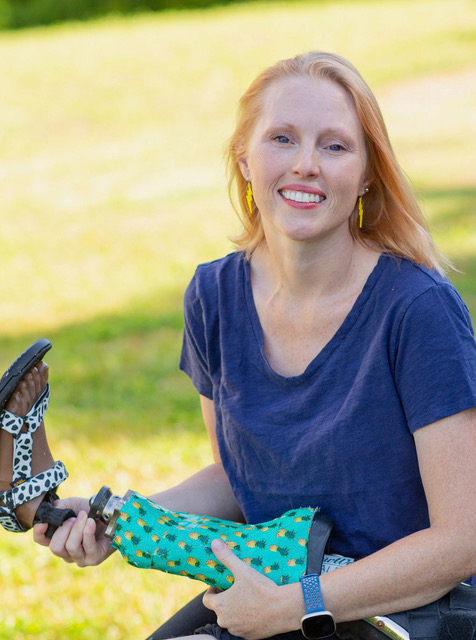
Dr. Ashley Shew is a multiply disabled person: tinnitus-buzzing, hard-of-hearing, chemobrained amputee (all due to treatment for bone cancer) with Crohn’s disease (unrelated to bone cancer). She is also a working philosopher of technology and biotech ethicist as a faculty member at Virginia Tech in the Department of Science, Technology, and Society.She has expertise on the subjects of animal studies, disability studies, ethics and emerging technologies, and technological knowledge. She likes the challenge of writing and adapting material for different audiences and communities.

Biosketch:
Dr. Chorong Park earned her Doctor of Philosophy in Technology with a minor in Gerontology, and her Master of Science in UX Design from Purdue University. Her work connects aging, usability research, and human–computer interaction, with emphasis on AR/VR experiences, AI-powered systems, and social robotics. Drawing on over 500 hours of ethnographic technology support with older adults and collaborations across computer science, health, and the social sciences, she develops strength-based, participatory design frameworks, including the Kansei of the Elderly model, that transform user frustration into autonomy, confidence, and delight. Her publications examine technoageism, ethical companion robotics, and age-centered practical UX. Her portfolio spans adaptive digital postcard interfaces for emotional well-being to ethically grounded companion robots. Park’s research advances practical, user-driven technologies that improve approachability, usability, independence, confidence, and joy for older adults in everyday settings.